
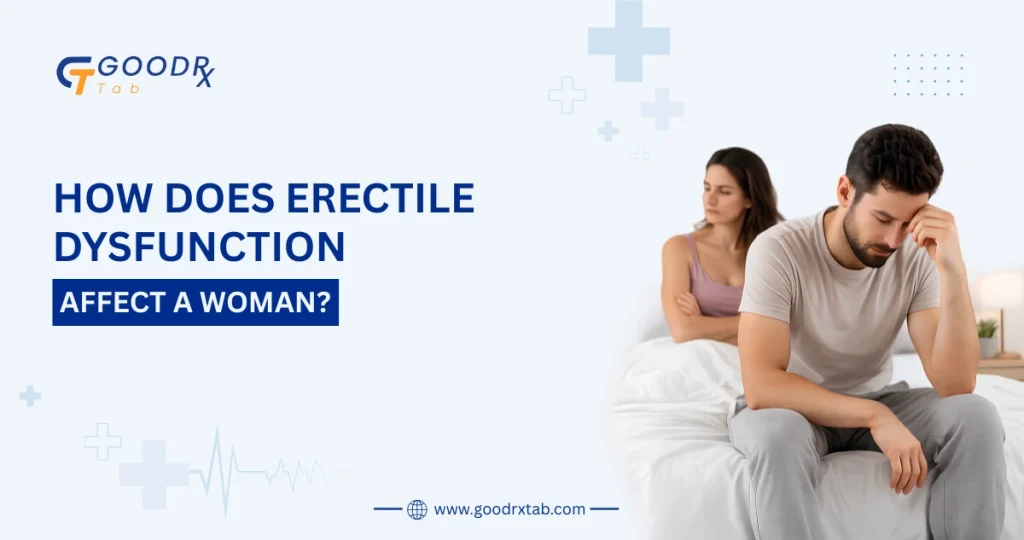
Erectile dysfunction is usually viewed as a condition that affects only men. However, when a man regularly struggles to get or maintain an erection, the experience can also affect his female partner. She may face emotional stress, reduced sexual satisfaction, self-doubt and a growing sense of distance in the relationship.
A woman may start wondering whether her partner still finds her attractive. She may feel rejected, even when her partner’s erection problem has nothing to do with his feelings for her. Meanwhile, the man may feel embarrassed and begin avoiding physical affection because he fears another difficult sexual experience.
Erectile dysfunction is a medical condition influenced by physical and psychological factors. It is not proof that love or attraction has disappeared. Open communication, emotional support, suitable treatment and healthy lifestyle changes can help couples manage the problem together.
What Is Erectile Dysfunction?
Erectile dysfunction, commonly known as ED, is the repeated difficulty in getting or keeping an erection firm enough for satisfying sexual activity. Occasional erection problems can happen because of tiredness, alcohol consumption, stress or nervousness. However, frequent problems may indicate a health condition that needs professional attention.
An erection depends on healthy blood circulation, nerves, hormones and mental stimulation. Conditions such as diabetes, obesity, high blood pressure, cardiovascular disease, hormonal problems and nerve damage can interfere with this process. Certain medicines, smoking, excessive alcohol use, anxiety, depression and relationship stress may also cause or worsen ED.
Although ED becomes more common with age, it is not simply an unavoidable part of getting older. Men of different ages may experience it, depending on their health, lifestyle and emotional well-being.
-
Cenforce 100
Erectile Dysfunction17 reviewsPrice range: $25.00 through $300.00 Select options This product has multiple variants. The options may be chosen on the product page -
Vidalista 20
Erectile Dysfunction18 reviewsPrice range: $24.00 through $270.00 Select options This product has multiple variants. The options may be chosen on the product page -
Avana 100
Avanafil4 reviewsPrice range: $64.00 through $220.00 Select options This product has multiple variants. The options may be chosen on the product page
Understanding the Female Partner’s Perspective
Women do not always know how to respond when their partner experiences ED. They may want to be supportive but feel uncomfortable discussing such a sensitive subject.
Some women avoid talking because they are worried about embarrassing their partner. Men may also remain silent because they fear judgement or feel that their masculinity is being questioned. As a result, both partners may have concerns but avoid discussing them.
This silence can create misunderstandings. The woman may believe her partner is losing interest, while the man may withdraw because he is worried about disappointing her. The problem then becomes emotional as well as physical.
The Emotional Effects of ED on Women
The reference article highlights three important emotional effects that women may experience: self-doubt, disconnection and changes in their sense of femininity or self-worth.
Self-Doubt and Insecurity
A woman may mistakenly see her partner’s erection as a direct measure of his attraction toward her. If he cannot get or maintain an erection, she might question her appearance or sexual appeal.
She may wonder:
- Does he still find me attractive?
- Is he interested in somebody else?
- Am I doing something wrong?
- Has our relationship changed?
These thoughts can reduce her confidence and create body-image concerns. However, erectile function and attraction are not the same. A man can strongly desire his partner and still experience ED because of poor blood flow, medication side effects, diabetes, stress or performance anxiety.
Women should remember that they are not responsible for controlling their partner’s physical response.
Emotional Disconnection
ED can create distance between partners when physical intimacy becomes less frequent. A man may start avoiding kissing, touching or cuddling because he worries that these actions will lead to sex.
His partner may not understand the reason for this behaviour. She may feel unwanted, ignored or emotionally abandoned. After experiencing rejection several times, she may also stop initiating affection.
This can create a cycle in which both people want closeness but are afraid to express it. The man avoids intimacy because of embarrassment, while the woman avoids it because she fears another rejection.
Changes in Femininity and Self-Worth
For some women, feeling sexually desired is connected to their sense of femininity and confidence. When ED affects their sexual relationship, they may feel less attractive or less valued as a partner.
These feelings are valid, but they are usually based on a misunderstanding of the condition. ED is not a judgement of a woman’s beauty, age, body or ability to satisfy her partner. Separating personal worth from a partner’s medical condition is an important part of coping with the situation.
How ED Affects a Woman’s Sexual Satisfaction
Erectile dysfunction can change the couple’s sexual routine. Intercourse may become less frequent, difficult to complete or filled with pressure. Instead of enjoying physical closeness, both partners may focus on whether the erection will appear or remain firm.
Sex may begin to feel like a test. The man may closely monitor his erection, while the woman may become afraid of doing something that causes him to lose it.
Research has found that male ED may negatively affect the sexual drive and satisfaction of female partners. Another study evaluating couples also found connections between a man’s erectile difficulties and his partner’s sexual functioning.
A woman may still desire intimacy but feel guilty about expressing her needs. Over time, unspoken frustration can become sadness or resentment.
Navigating the Relationship Together
ED should be approached as a shared relationship challenge rather than one person’s failure. This does not mean that the woman is responsible for treating it. It means that honest communication and mutual support can make the experience easier for both people.
Create a Safe Space for Communication
Choose a calm and private time to discuss ED. Avoid starting a serious conversation immediately after an unsuccessful sexual experience, when both partners may already feel vulnerable.
The conversation should be supportive rather than critical. A woman might say:
“I care about you, and I do not want you to face this alone. We can look for a solution together.”
Both partners should be able to share their feelings, concerns and needs without fear of blame. Avoid jokes about masculinity, age or sexual performance because they can increase embarrassment and performance anxiety.
Maintain Emotional and Physical Intimacy
Intimacy does not have to depend entirely on penetration. Couples can remain close through affection, kissing, touching, massage, meaningful conversations and quality time together.
Removing the expectation that every intimate moment must lead to intercourse can reduce pressure. It allows both partners to enjoy closeness without constantly worrying about erection firmness.
Couples can also strengthen their bond by showing appreciation, planning time together and discussing what makes each person feel loved and supported.
Separating a Woman’s Self-Worth From ED
A woman should remind herself that her partner’s ED is not proof that she is unattractive or undesirable. It may be caused by a medical condition, emotional stress or a combination of factors.
Her feelings still deserve attention. Being supportive does not mean hiding her sadness, loneliness or frustration. She can explain how ED affects her while showing compassion for what her partner is experiencing.
When both people feel heard, the condition is less likely to create blame or emotional distance.
Erectile Dysfunction Treatment Options
Regular erection problems should be discussed with a licensed healthcare professional. Diagnosis may include reviewing the man’s medical, sexual and emotional history, completing a physical examination and performing tests when needed.
Lifestyle Changes
A healthcare professional may recommend regular physical activity, healthy weight management, stopping smoking, limiting alcohol and following a balanced diet. Managing conditions such as diabetes, high blood pressure and heart disease may also support erectile health.
Oral Medicines
PDE5 inhibitors such as sildenafil, tadalafil and vardenafil can improve blood flow to the penis. These medicines require sexual stimulation and may not be safe for every man.
They must not be combined with nitrate medicines for chest pain because the combination can cause a dangerous fall in blood pressure. ED medicines should only be used after consultation with a qualified medical professional.
Counselling
Counselling may help when stress, anxiety, depression or relationship difficulties are contributing to ED. A counsellor may also involve the partner so that the couple can improve communication, reduce performance pressure and rebuild intimacy.
Conclusion
Erectile dysfunction can affect a woman emotionally, sexually and relationally. It may cause self-doubt, reduced confidence, loneliness, frustration and a sense of disconnection from her partner.
However, ED does not necessarily mean that a man has lost attraction or interest. It is a medical condition that may be related to physical health, emotional well-being, medication use or lifestyle factors.
Open communication, emotional support and medical care can help couples manage ED without blame. By maintaining affection and facing the condition together, partners can protect their relationship and rebuild a satisfying intimate connection.
FAQs
Can a woman cause erectile dysfunction?
A woman does not directly cause ED. However, relationship conflict, pressure or performance anxiety may worsen erection difficulties that are already present.
Does ED mean a man is not attracted to his partner?
No. A man can feel attracted to his partner and still experience ED because of health conditions, medication effects, stress or anxiety.
Can a man with ED satisfy a woman?
Yes. ED does not prevent emotional closeness or other forms of sexual pleasure. Couples can explore different ways of expressing affection and intimacy.
Can erectile dysfunction be improved?
Many cases can be treated or improved by managing underlying health problems, making lifestyle changes, receiving counselling or using professionally prescribed treatments.
Should a woman talk to her partner about ED?
Yes. A calm and respectful conversation can reduce misunderstandings. Choose a private time and focus on support instead of blame.
Citations
GoodRxTab only refers to credible, authoritative sources for our content. If you’re curious about how we ensure the integrity of our content, we encourage you to read our Content Information Policy.