
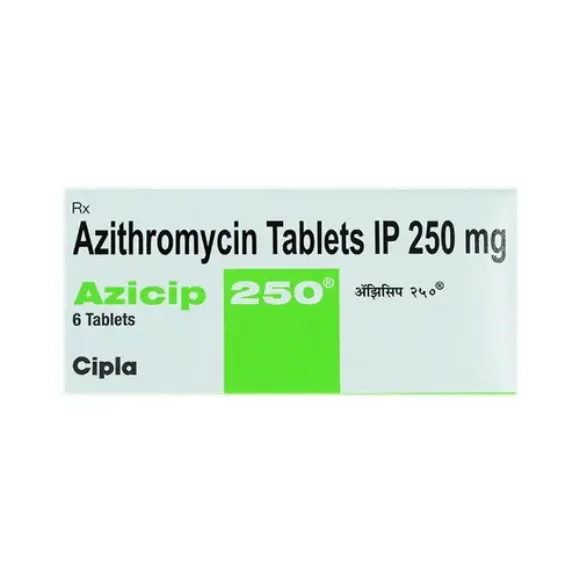
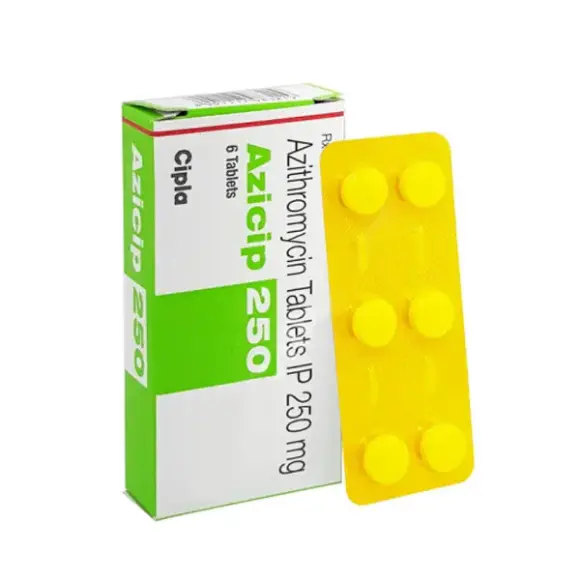
Azicip 250 mg Tablet (Azithromycin)
Azicip 250 mg is a prescription antibiotic containing Azithromycin 250 mg. It is used to treat certain bacterial infections affecting the throat, lungs, ears, skin, and other parts of the body. It belongs to the macrolide antibiotic group and works by stopping bacteria from making the proteins they need to grow.
Pack options
Choose Your Pack
Review prescription requirements before ordering. Ask a qualified healthcare professional about suitability.
| Brand | Azicip 250 mg |
| Active ingredient | Azithromycin 250 mg |
| Drug class | Macrolide Antibiotic |
| Used for | Susceptible bacterial infections |
| Dosage form | Film-coated oral tablet |
| Strength | 250 mg |
| Manufacturer | Cipla Ltd |
| Pack | Strip of 3 tablets |
| Prescription | Required |
| Storage | Below 30°C, dry place, away from light |
What is Azicip 250 mg?
Azicip 250 mg is an oral antibiotic medicine containing 250 mg of Azithromycin. It is manufactured by Cipla Ltd., an Indian pharmaceutical company, and belongs to a group of medicines called macrolide antibiotics.
Doctors prescribe this medicine for certain infections caused by bacteria. These may include respiratory tract infections, some throat and ear infections, skin infections, and selected sexually transmitted bacterial infections.
Azithromycin, the active ingredient in Azicip, is also found in the original brand medicine Zithromax.
Unlike medicines that simply reduce pain or fever, Azicip acts against susceptible bacteria responsible for an infection. By controlling bacterial growth, it helps the body’s immune system clear the infection.
However, not every infection requires an antibiotic. Azicip 250 mg does not treat viral illnesses such as the common cold or flu. A doctor should decide whether this medicine is suitable based on the suspected bacteria, infection site, and local antibiotic resistance patterns.
What is Azicip 250 mg used for?
Azicip 250 mg is used to treat selected bacterial infections when the bacteria are susceptible to Azithromycin.
Doctors may prescribe it for the following conditions:
- Respiratory tract infections: Certain bacterial infections affecting the lungs, including some cases of community-acquired pneumonia.
- Throat infections: Selected bacterial throat or tonsil infections, generally when an appropriate first-choice antibiotic cannot be used.
- Ear infections: Certain bacterial middle-ear infections, depending on the patient’s age and medical assessment.
- Skin infections: Some uncomplicated bacterial infections involving the skin and nearby tissues.
- Bacterial bronchitis-related infections: Certain bacterial flare-ups of chronic bronchitis in adults.
- Sexually transmitted bacterial infections: Specific infections when Azithromycin remains an appropriate treatment under current clinical guidelines.
Azicip is not the first-choice antibiotic for every condition listed above. Its use depends on the diagnosis, current treatment guidelines, and bacterial resistance.
How does Azicip 250 mg work?
Azicip 250 mg works by interfering with how bacteria produce essential proteins.
Bacteria need proteins to grow, maintain their structure, and multiply. Azithromycin attaches to a part of the bacterial ribosome called the 50S subunit. This prevents the bacteria from producing certain proteins required for normal growth.
As bacterial multiplication slows, the immune system has a better chance of controlling and removing the infection.
Azithromycin also reaches many body tissues and remains in them for an extended period. This is one reason doctors can prescribe it once daily for certain infections.
However, the medicine only works against bacteria that are sensitive to it. Some bacteria have developed resistance, meaning Azithromycin may no longer work effectively against them.
It is important to take Azicip only for infections where a healthcare professional considers it appropriate.
How to take Azicip 250 mg?
Take Azicip 250 mg exactly as prescribed by your doctor. The correct dose and treatment duration depend on the type of infection, your age, medical history, and other medicines you take.
General instructions include:
- Dosage: Follow the prescribed number of tablets. A 250 mg tablet is not automatically a complete daily dose.
- Timing: Azithromycin is commonly taken once daily, depending on the treatment plan.
- Administration: Swallow the tablet with a glass of water.
- Food: Standard Azithromycin tablets can generally be taken with or without food. Follow the instructions on your specific Azicip pack.
- Treatment course: Take every prescribed dose and complete the course unless your healthcare professional advises you to stop.
- Antacids: Avoid taking aluminum- or magnesium-containing antacids at the same time. Ask your pharmacist about suitable spacing.
Do not increase the dose or extend treatment without medical advice. Taking additional tablets will not necessarily clear an infection faster and may increase the risk of side effects.
Azicip 250 mg dosage and treatment duration
The dosage of Azicip 250 mg varies according to the infection being treated.
For example, one established adult Azithromycin regimen for certain bacterial respiratory and skin infections is:
| Treatment Day | Example Adult Dose |
|---|---|
| Day 1 | 500 mg |
| Day 2 | 250 mg |
| Day 3 | 250 mg |
| Day 4 | 250 mg |
| Day 5 | 250 mg |
This is an example of a prescribed five-day regimen, not a universal dosing recommendation. Other infections may require different doses or treatment lengths.
Children require dosing based on their weight, age, and diagnosis. A 250 mg tablet may not be suitable for a particular child.
Patients with certain medical conditions may also require additional assessment before treatment.
Never start this schedule on your own. Use the instructions provided with your prescription.
How long does Azicip 250 mg take to work?
Azicip begins working against susceptible bacteria after it is absorbed into the body. However, improvement in symptoms is not always immediate.
Some people start feeling better within two to three days of beginning treatment. The actual time depends on the infection, its severity, and the individual’s response.
Fever, discomfort, and other symptoms may improve gradually as the infection comes under control.
Azithromycin stays in body tissues for several days after the final dose, but this does not mean every infection can be treated with a short course.
If your symptoms become worse, or you do not notice the expected improvement, contact your doctor. Do not take extra tablets to speed up recovery.
What are the side effects of Azicip 250 mg?
Like other antibiotics, Azicip 250 mg can cause side effects. Many are mild and temporary, but some require medical attention.
Common side effects
Commonly reported side effects include:
- Nausea
- Diarrhea
- Stomach pain or discomfort
- Vomiting
- Reduced appetite
- Headache
- Changes in taste
These symptoms are often manageable, but persistent or troublesome effects should be discussed with a healthcare professional.
Drinking enough fluids may help prevent dehydration if you experience mild diarrhea or vomiting.
Serious side effects
Although uncommon, Azithromycin can sometimes cause serious reactions.
Seek urgent medical attention if you experience:
- Difficulty breathing or swelling of the face, tongue, or throat
- A severe skin rash, blistering, or peeling
- A fast, irregular heartbeat, fainting, or severe dizziness
- Yellowing of the eyes or skin, dark urine, or other signs of liver problems
- Severe or persistent diarrhea, particularly with blood or mucus
- New hearing problems or significant changes in hearing
Severe antibiotic-associated diarrhea can occasionally appear weeks after treatment has ended.
Do not ignore unusual symptoms simply because you have already finished taking the tablets.
Azicip 250 mg interactions
Azicip may interact with certain medicines, making side effects more likely or changing how the medicines work.
Drug interactions
Inform your doctor or pharmacist if you use:
- Antacids: Products containing aluminum or magnesium should not be taken simultaneously with Azithromycin.
- Warfarin: Additional monitoring may be necessary because changes in blood-clotting measurements can occur.
- Heart rhythm medicines: Some medicines, including certain antiarrhythmics, may increase the risk of abnormal heart rhythms.
- Digoxin: Azithromycin may increase digoxin exposure in some patients.
- Colchicine: This combination may increase the risk of colchicine toxicity.
- Other QT-prolonging medicines: Combining these medicines may increase the risk of potentially dangerous heart rhythm problems.
Always share a complete list of prescription medicines, over-the-counter products, and supplements with your healthcare professional.
Disease interactions
Extra care is necessary if you have a history of:
- Liver disease
- Kidney problems
- Irregular heartbeat
- Long QT syndrome
- Low potassium or magnesium levels
- Myasthenia gravis
- Severe diarrhea associated with previous antibiotic treatment
Your doctor may consider another antibiotic or recommend additional monitoring.
Food and alcohol interactions
Standard Azithromycin tablets can usually be taken with or without food. If you experience stomach discomfort, ask your pharmacist whether taking your specific formulation with food would help.
Alcohol does not have a major direct interaction with Azithromycin, but drinking may worsen nausea, dizziness, or dehydration while you are unwell.
Avoid heavy drinking during recovery.
Precautions and warnings
Before starting Azicip 250 mg, tell your doctor about your medical conditions and any previous reactions to antibiotics.
Allergic reactions: Do not take Azicip if you have a known serious allergy to Azithromycin, erythromycin, or related macrolide antibiotics.
Heart conditions: Azithromycin can affect the heart’s electrical activity and may increase the risk of abnormal rhythms, particularly in susceptible patients.
Liver health: Serious liver injury has been reported with Azithromycin. It should not be used by patients who previously developed certain types of liver injury from this medicine.
Pregnancy and breastfeeding: If you are pregnant, planning pregnancy, or breastfeeding, discuss the benefits and possible risks with your doctor before starting treatment.
Children: Pediatric treatment requires an appropriate formulation and carefully selected dose.
Antibiotic resistance: Avoid taking leftover tablets or antibiotics prescribed for someone else. Incorrect antibiotic use can contribute to the development of resistant bacteria.
A medical assessment is especially important if you have several ongoing health conditions or regularly take prescription medicines.
What happens if you miss a dose or take too much?
Missed dose
If you forget to take Azicip 250 mg, take the missed dose when you remember unless it is almost time for your next scheduled dose.
If your next dose is approaching, skip the forgotten tablet and continue your normal schedule.
Do not take two doses together to replace a missed dose.
Overdose
Taking more Azicip than prescribed may increase the risk of nausea, vomiting, diarrhea, and other unwanted effects.
If you accidentally take too much, contact a healthcare professional or poison control service promptly for advice.
Seek emergency care if you develop severe symptoms, fainting, breathing difficulties, or an irregular heartbeat.
Azicip 250 mg vs Azicip 500 mg
Azicip tablets are available in different strengths to suit particular treatment regimens.
| Features | Azicip 250 mg | Azicip 500 mg |
|---|---|---|
| Active ingredient | Azithromycin | Azithromycin |
| Strength | 250 mg | 500 mg |
| Medicine class | Macrolide antibiotic | Macrolide antibiotic |
| Main purpose | Susceptible bacterial infections | Susceptible bacterial infections |
| Manufacturer | Cipla | Cipla |
| Prescription | Required | Required |
Both strengths contain the same active ingredient. The main difference is the quantity of Azithromycin in each tablet.
A 500 mg tablet contains twice as much active ingredient as a 250 mg tablet, but it is not necessarily a better treatment option.
Your doctor will select the strength and number of tablets needed for your prescribed course.
How to store Azicip 250 mg
Proper storage helps maintain the medicine’s quality until its expiry date.
- Store the tablets according to the temperature instructions printed on the original packaging.
- Keep them away from excess heat, direct sunlight, and moisture.
- Leave tablets in their original packaging until needed.
- Keep all medicines out of the reach of children and pets.
- Do not use tablets after the printed expiry date.
- Ask your pharmacist how to dispose of unused or expired antibiotics.
Avoid keeping medicines in damp areas, such as bathrooms, where humidity can affect their condition.
Important things to know before using Azicip 250 mg
Antibiotics should be used carefully because not every fever, cough, or sore throat is caused by bacteria.
For example, the common cold and most cases of flu are caused by viruses. Taking Azicip for these infections will not help the body fight the virus.
Using antibiotics when they are unnecessary may cause side effects and contribute to antibiotic resistance.
It is also important not to share Azicip with another person, even if they have symptoms similar to yours. Their illness may have a different cause and require different treatment.
If your doctor prescribes Azicip, follow the treatment instructions carefully and report any worsening symptoms.
Why choose Azicip 250 mg?
Azicip 250 mg provides a 250 mg tablet strength of Azithromycin for patients who have been prescribed this antibiotic.
Its main features include:
- Contains Azithromycin, a widely used macrolide antibiotic.
- Available in a 250 mg oral tablet strength.
- Used for selected susceptible bacterial infections.
- Can be included in once-daily treatment regimens.
- Manufactured by Cipla Ltd.
- Should be supplied through a legitimate pharmacy against a valid prescription.
The medicine is appropriate only when a healthcare professional confirms that Azithromycin is suitable for the infection and the patient’s health needs.
Frequently asked questions
What is Azicip 250 mg used for?
Azicip 250 mg treats certain bacterial infections affecting the respiratory tract, throat, ears, skin, and other body areas. A doctor decides whether it is appropriate based on the infection and bacterial susceptibility.
Is Azicip 250 mg an antibiotic?
Yes. It contains Azithromycin, a macrolide antibiotic that interferes with bacterial protein production and helps control infections caused by susceptible bacteria.
Can I take Azicip 250 mg for a cold or flu?
No. The common cold and flu are viral infections. Azithromycin does not kill viruses and should not be used for these illnesses unless a doctor diagnoses a separate bacterial infection.
How many days should I take Azicip 250 mg?
Treatment duration varies by infection. Some prescribed courses last three or five days, while other conditions require different schedules. Follow your doctor’s specific instructions.
Can I take Azicip 250 mg on an empty stomach?
Standard Azithromycin tablets can generally be taken with or without food. Follow your product’s packaging instructions or ask your pharmacist if you are unsure.
Can Azicip 250 mg cause diarrhea?
Yes. Diarrhea is a common side effect. Contact a doctor promptly if it becomes severe, continues, or contains blood or mucus.
Is Azicip 250 mg safe during pregnancy?
Azithromycin may be prescribed during pregnancy when a healthcare professional considers it necessary. The decision depends on the infection and the patient’s circumstances. Do not self-medicate during pregnancy.
What if I feel better before finishing the treatment?
Continue taking Azicip as prescribed, even if your symptoms improve early. Do not stop or shorten the course unless your healthcare professional advises you to do so.
Is Azicip 250 mg the same as Zithromax?
Both contain Azithromycin. However, they are different brands, and their packaging, manufacturers, and country-specific regulatory approvals may differ.
The information provided on this product page is intended for educational and informational purposes only. It is not a substitute for professional medical advice, diagnosis, or treatment. Always consult a qualified healthcare professional before using any medicine.
Customer Reviews
4 published reviews
Completely satisfied with the results; this male enhancement product worked as promised, boosting confidence, strength, energy, and overall performance.
Quick shipping, easy website, great quality products at good prices – everything you want in an online shopping experience. Been using them for years & will continue.
Great products! Great service! Highly recommend!
It’s overall been an excellent experience. I’ve placed three orders and each time received all went perfect. I’ll continue to use this company.