
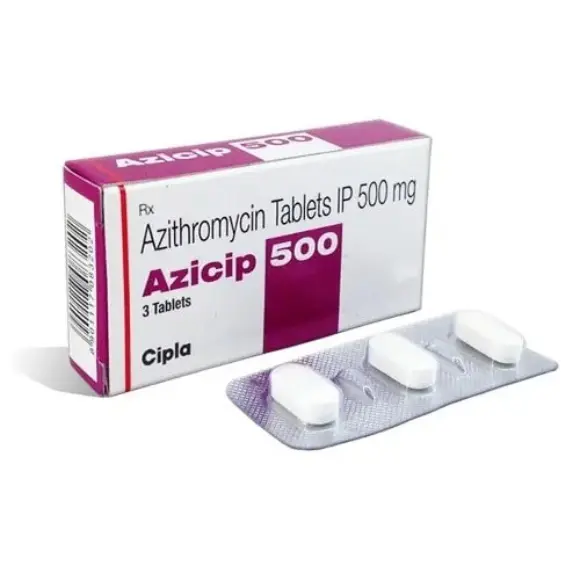
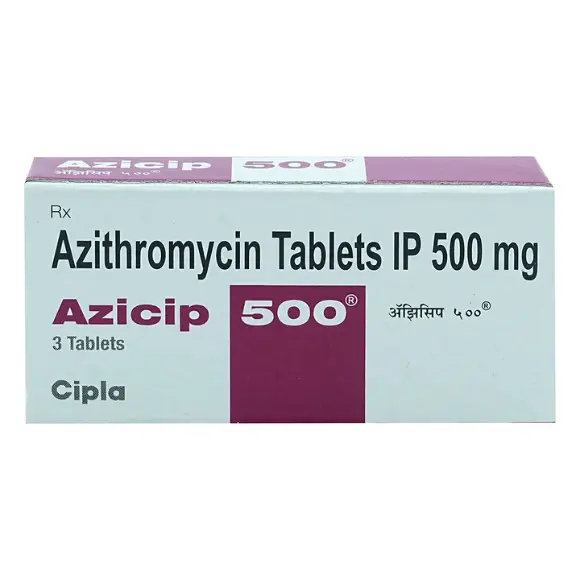
Azicip 500 mg Tablet (Azithromycin)
Azicip 500 mg is a prescription antibiotic containing Azithromycin 500 mg. It is manufactured by Cipla Limited and is used to treat certain bacterial infections affecting the respiratory tract, throat, ears, and skin.
Pack options
Choose Your Pack
Review prescription requirements before ordering. Ask a qualified healthcare professional about suitability.
| Brand | Azicip 500 mg |
| Active ingredient | Azithromycin 500 mg |
| Drug class | Macrolide Antibiotic |
| Used for | Susceptible bacterial infections |
| Dosage form | Film-coated oral tablet |
| Strength | 500 mg |
| Manufacturer | Cipla Ltd |
| Pack | Strip of 3 tablets |
| Prescription | Required |
| Storage | Below 30°C, dry place, away from light |
What is Azicip 500 mg?
Azicip 500 mg is an oral antibiotic medicine used to treat infections caused by certain bacteria. Each tablet contains 500 mg of Azithromycin, which belongs to a group of medicines called macrolide antibiotics.
The medicine is manufactured by Cipla Limited, an Indian pharmaceutical company. Azithromycin is also the active ingredient found in the original brand medicine Zithromax.
Doctors may prescribe Azicip 500 mg for bacterial infections affecting different parts of the body. The treatment depends on the type of infection, its severity, and the patient’s medical history.
Azicip does not treat viral illnesses such as the common cold or flu. Taking antibiotics when they are not needed can contribute to antibiotic resistance, making some bacterial infections more difficult to treat in the future.
What is Azicip 500 mg used for?
Azicip 500 mg is prescribed for certain bacterial infections when the responsible bacteria are likely to respond to azithromycin.
Depending on local prescribing guidelines, the medicine may be used for:
- Respiratory tract infections: Certain bacterial infections affecting the lungs and airways, including community-acquired pneumonia.
- Throat infections: Some bacterial throat and tonsil infections when azithromycin is an appropriate treatment.
- Sinus infections: Certain cases of acute bacterial sinusitis.
- Ear infections: Selected bacterial middle-ear infections, using an age-appropriate formulation and dose.
- Skin infections: Certain uncomplicated bacterial infections affecting the skin and surrounding tissues.
- Specific sexually transmitted bacterial infections: Selected infections when recommended by current clinical guidelines.
Not every infection requires azithromycin. A doctor must decide whether this antibiotic is suitable, as some bacteria are resistant to it.
How does Azicip 500 mg work?
Azicip 500 mg contains Azithromycin, which helps control bacterial infections by interfering with protein production inside bacterial cells.
Bacteria need proteins to grow, maintain their structure, and multiply. Azithromycin attaches to a part of the bacterial ribosome called the 50S subunit. This prevents the bacteria from producing important proteins.
As bacterial growth slows, the body’s immune system has a better chance of clearing the infection.
Azithromycin remains in body tissues for some time after a dose. This is one reason certain infections can be treated with relatively short courses.
However, the medicine does not work against every type of bacteria. It also has no effect on viruses. Taking Azicip without a proper diagnosis may delay the correct treatment.
How to take Azicip 500 mg
Take Azicip 500 mg exactly as your doctor has prescribed. The number of tablets and length of treatment depend on the infection being treated.
General instructions include:
- Dosage: Take only the amount prescribed by your healthcare professional.
- Timing: Azithromycin is often taken once daily. Follow the schedule on your prescription.
- Administration: Swallow the tablet with water.
- Food: Some azithromycin tablets can be taken with or without food. Follow the instructions supplied with your particular product.
- Antacids: Aluminium- or magnesium-containing antacids may need to be taken at a different time.
- Treatment course: Complete the prescribed treatment unless your doctor tells you to stop.
Try to take the medicine at the same time each day.
Do not take extra tablets to speed up your recovery. Taking more than prescribed will not necessarily improve the treatment and may increase the risk of unwanted effects.
Azicip 500 mg dosage
The correct dose depends on the bacterial infection, the patient’s age, other medical conditions, and the prescribed treatment plan.
For example, some adult bacterial infections are treated with 500 mg once daily for three days. Other infections may require 500 mg on the first day, followed by 250 mg daily for another four days.
These are examples of established azithromycin regimens, not instructions for self-treatment.
A 500 mg tablet is not appropriate for every patient or infection. Children often require a lower, weight-based dose using a suitable formulation.
People with certain liver or kidney problems may need additional assessment before treatment.
Never change the dose or repeat a previous antibiotic course without medical advice.
How long does Azicip 500 mg take to work?
Azithromycin begins acting against susceptible bacteria after it is absorbed into the body. However, relief from infection symptoms is not immediate.
Some patients notice improvement within two or three days of starting treatment. Others may need more time, depending on the type and severity of infection.
For example, fever may settle before a cough or tiredness completely disappears.
If symptoms become worse, new symptoms appear, or there is no improvement within the time expected by your doctor, seek medical advice.
Feeling better does not mean you should stop taking the antibiotic early. Follow the full course prescribed for your condition.
What are the side effects of Azicip 500 mg?
Like other antibiotics, Azicip 500 mg may cause side effects. Not everyone experiences them, and many common effects are temporary.
Common side effects
- Nausea
- Diarrhoea
- Vomiting
- Stomach pain
- Headache
- Loss of appetite
- Mild digestive discomfort
Digestive problems are among the more frequently reported effects of azithromycin.
Drinking enough fluids may help prevent dehydration if mild diarrhoea occurs. Eating simple meals may also make nausea easier to manage.
Speak with your doctor if side effects continue, become troublesome, or interfere with eating and drinking.
Serious side effects
Although uncommon, some reactions require urgent medical attention.
These include:
- Fast, irregular, or unusual heartbeat
- Severe dizziness or fainting
- Yellowing of the skin or eyes
- Dark urine with unusual tiredness
- Severe or bloody diarrhoea
- Serious skin reactions with blistering or peeling
- Sudden worsening of muscle weakness
- Swelling of the face or throat with breathing difficulty
Severe diarrhoea can sometimes develop during treatment or weeks after the antibiotic has been stopped.
If you experience signs of a severe allergic reaction, seek emergency medical help immediately. Do not take another dose until a healthcare professional has assessed you.
Azicip 500 mg drug interactions
Azicip 500 mg may interact with other medicines. Some combinations can increase side effects or change how a medicine works.
Tell your doctor or pharmacist about all prescription medicines, non-prescription products, and supplements you use.
Medicines requiring particular attention
- Antacids: Products containing aluminium or magnesium may affect azithromycin absorption when taken at the same time.
- Warfarin: Additional blood-clotting tests may be needed.
- Digoxin: Azithromycin may increase digoxin exposure in some patients.
- Heart rhythm medicines: Medicines such as amiodarone or sotalol may increase the risk of abnormal heart rhythms.
- Hydroxychloroquine: Combining these medicines may increase heart rhythm concerns in susceptible patients.
- Colchicine: Azithromycin may increase exposure to colchicine.
- Certain cholesterol medicines: Rare muscle-related problems have been reported with some statins.
Do not stop your regular medicines without professional advice. Your doctor may recommend monitoring, dose adjustments, or a different antibiotic.
Precautions and warnings
Before taking Azicip 500 mg, discuss your medical history with your healthcare professional.
Heart conditions
Azithromycin can affect the electrical activity of the heart, particularly in people with a prolonged QT interval, a history of arrhythmias, or low potassium or magnesium levels.
Liver problems
Tell your doctor if you have liver disease or have previously experienced liver problems while taking azithromycin.
Kidney problems
Patients with significant kidney impairment may require closer medical assessment.
Antibiotic allergies
Do not take Azicip if you have a known serious allergy to azithromycin or related macrolide antibiotics.
Myasthenia gravis
Azithromycin may worsen muscle weakness in patients with myasthenia gravis.
Pregnancy and breastfeeding
Tell your doctor if you are pregnant, planning pregnancy, or breastfeeding. Azithromycin may be prescribed in some circumstances when a healthcare professional considers it appropriate.
Children and older adults
Children need an age- and weight-appropriate treatment plan. Older adults may have additional heart rhythm risks or take medicines that interact with azithromycin.
Can Azicip 500 mg be taken with food or alcohol?
Follow the food instructions supplied with your specific Azicip tablets. If the medicine causes stomach discomfort, ask your pharmacist whether taking it with food is suitable.
There is no universal requirement to avoid alcohol because of a direct azithromycin interaction. However, alcohol may make nausea, dizziness, or dehydration worse during illness.
Avoid heavy drinking while recovering from an infection.
Also remember that antacids containing aluminium or magnesium may need to be separated from your antibiotic dose.
What happens if you miss a dose?
If you forget to take Azicip 500 mg, take the missed dose when you remember unless it is nearly time for your next scheduled dose.
If the next dose is due soon, skip the missed dose and continue with your regular schedule.
Never take two doses together to make up for a forgotten tablet.
If you miss several doses, contact your doctor or pharmacist to discuss how to complete the treatment correctly.
What happens if you take too much Azicip 500 mg?
Taking more Azicip than prescribed can increase the chance of side effects, including nausea, vomiting, and diarrhoea.
In some circumstances, an overdose may also cause more serious problems.
Contact a healthcare professional or poison control service promptly if you take too much. Seek emergency care if you develop severe symptoms, fainting, breathing difficulties, or an abnormal heartbeat.
Keep the medicine packaging available so healthcare professionals can identify the strength and amount taken.
Azicip 500 mg and antibiotic resistance
Antibiotic resistance happens when bacteria develop the ability to survive medicines that previously controlled them.
Using antibiotics for viral infections, taking the wrong antibiotic, or using leftover tablets without medical advice can contribute to this problem.
Azicip 500 mg should only be used for a bacterial infection when a clinician considers azithromycin appropriate.
Do not share your tablets with another person, even if their symptoms appear similar.
Taking antibiotics responsibly helps preserve their effectiveness for patients who genuinely need them.
Azicip 500 mg strengths and alternatives
Azicip is available in different strengths and formulations, including Azicip 250 mg tablets and oral suspensions.
The appropriate formulation depends on the prescribed dose and the patient’s needs.
Other antibiotics may sometimes be considered, including amoxicillin, doxycycline, or clarithromycin. However, these medicines are not automatically interchangeable.
The best choice depends on the infection, allergies, local antibiotic resistance patterns, and other medical conditions.
Never replace one antibiotic with another without asking your healthcare professional.
How to store Azicip 500 mg
Proper storage helps maintain the quality of the medicine.
- Keep the tablets in their original packaging.
- Store according to the temperature instructions on the product label.
- Protect the medicine from excess heat and moisture.
- Keep it away from children and pets.
- Check the expiry date before use.
- Do not use tablets from damaged or unidentified packaging.
Ask a pharmacist how to dispose of expired or unused antibiotics. Do not keep leftover tablets for a future infection.
Important points before obtaining Azicip 500 mg
Azicip 500 mg is a prescription antibiotic and should only be supplied through an appropriately licensed pharmacy.
Before obtaining the medicine, confirm that:
- A qualified healthcare professional has prescribed azithromycin for your condition.
- The product is supplied in genuine, properly labelled packaging.
- The expiry date and storage instructions are clearly displayed.
- The tablet strength matches your prescription.
- A pharmacist is available to answer medicine-related questions.
The safest choice is to use antibiotics only after an appropriate medical assessment.
Frequently Asked Questions
What is Azicip 500 mg used for?
Azicip 500 mg is used to treat certain bacterial infections, including selected respiratory, throat, sinus, and skin infections. A doctor determines whether azithromycin is suitable.
Is Azicip 500 mg an antibiotic?
Yes. It contains Azithromycin 500 mg, a macrolide antibiotic that stops susceptible bacteria from producing proteins needed for growth.
Can Azicip 500 mg treat a cold or flu?
No. Colds and flu are caused by viruses. Azicip does not treat viral infections.
How many days should I take Azicip 500 mg?
Treatment duration depends on the infection. Some conditions require a three-day course, while others need a different schedule. Follow your prescription.
Can I take Azicip 500 mg daily?
It is commonly prescribed once daily for a limited treatment course. It should not be taken continuously or repeatedly without medical supervision.
Can Azicip 500 mg cause diarrhoea?
Yes. Diarrhoea is a common side effect. Seek medical advice if it becomes severe, persistent, or bloody.
Is Azicip 500 mg safe during pregnancy?
Azithromycin may be prescribed during pregnancy when medically appropriate. A healthcare professional should assess the benefits and possible risks.
Can I stop Azicip 500 mg when I feel better?
Do not stop early without speaking to your prescriber. Complete the course as directed, unless a healthcare professional advises you to stop.
Is Azicip 500 mg the same as Zithromax?
Both contain azithromycin. However, manufacturers, packaging, inactive ingredients, and local regulatory approvals may differ.
Do I need a prescription for Azicip 500 mg?
Yes. Azicip 500 mg is a prescription antibiotic. A healthcare professional should confirm that it is appropriate for your bacterial infection.
The information provided on this product page is intended for educational and informational purposes only. It is not a substitute for professional medical advice, diagnosis, or treatment. Always consult a qualified healthcare professional before using any medicine.
Customer Reviews
6 published reviews
Easy process from ordering to receiving my parcel, easy website to navigate, was able to purchase exactly what I was looking for at a very competitive price, will be ordering again in future, thanks for a great service.
Quick turn around and easy ordering. Everything arrives as promised and you are updated all along the way about order and shipping status.
Totally pleased with their service. Grateful for all they do. I will continue to order from them. Love and light to their great team.
Finding what you need just got easier. Easy access to over 10 different products
Works like name brand
I’m so pleased with this site Finally a site that provides what I need and delivers exactly as I ordered I will definitely continue to use this site and share this with all of my friends