
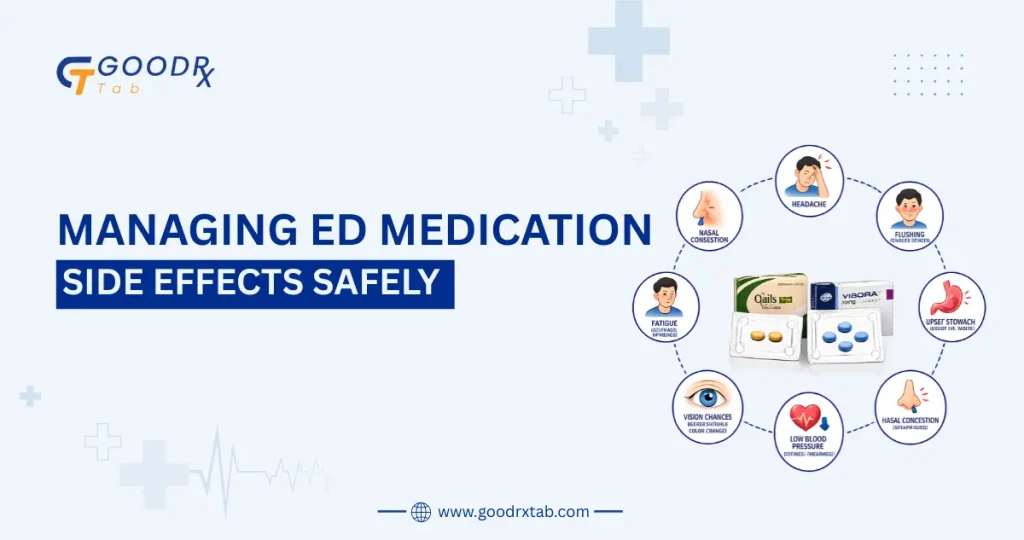
Erectile dysfunction medicines can help many men improve their sexual performance, confidence, and quality of life. Common ED medicines include sildenafil, tadalafil, vardenafil, and avanafil. These treatments are generally safe when used correctly, but they may cause side effects in some users.
Most side effects are mild and disappear as the medicine leaves the body. However, certain symptoms may require medical attention. Understanding common side effects, medicine interactions, and warning signs can help you use ED medication more safely.
Why Do ED Medicines Cause Side Effects?
Most oral ED medicines belong to a group known as PDE5 inhibitors. They relax blood vessels and improve blood flow to the penis during sexual stimulation.
However, these medicines can also affect blood vessels in other parts of the body. This may cause temporary symptoms such as headaches, facial flushing, dizziness, indigestion, or nasal congestion.
Not every person experiences side effects. The reaction may depend on your dose, general health, food intake, alcohol consumption, and other medicines you are taking.
Common ED Medication Side Effects
1. Headache
Headache is one of the most common side effects of ED medicines. It occurs because the medication temporarily widens blood vessels.
A mild headache may improve if you:
- Drink enough water.
- Rest in a quiet place.
- Avoid excessive alcohol.
- Reduce exposure to bright light.
- Ask a pharmacist about suitable pain relief.
Do not automatically take pain medicine if you have liver, kidney, stomach, or heart problems. Speak to a healthcare professional if the headache is severe, continues for several hours, or happens after every dose.
2. Facial Flushing
Facial flushing may make your face, neck, or upper chest feel warm and appear red. It is usually harmless and goes away without treatment.
To reduce discomfort:
- Sit in a cool room.
- Drink cold water.
- Avoid hot showers.
- Limit alcohol and hot drinks.
- Wear light and comfortable clothing.
Seek medical help if flushing occurs with swelling, breathing problems, a serious rash, or fainting.
3. Indigestion or Heartburn
Some men experience indigestion, nausea, heartburn, or stomach discomfort after taking ED medication.
You may reduce these problems by:
- Avoiding oily, spicy, or very heavy meals.
- Eating smaller portions.
- Not lying down immediately after eating.
- Following the food instructions given with your medicine.
A fatty meal may delay how quickly some ED medicines, especially sildenafil, begin to work. Do not take another tablet because the first dose appears to be working slowly.
Healthy daily habits can also make treatment more effective. Read about lifestyle changes that may improve ED pill effectiveness for practical advice on diet, exercise, stress, and sleep.
4. Blocked or Stuffy Nose
A blocked nose may occur because ED medication affects blood vessels inside the nasal passages.
Simple steps that may help include:
- Drinking water regularly.
- Using a saline nasal spray.
- Avoiding cigarette smoke.
- Staying away from strong perfumes.
- Keeping your head slightly raised while sleeping.
Ask a pharmacist before taking a medicated decongestant, particularly if you have high blood pressure or heart disease.
5. Dizziness
ED medicines can sometimes cause a small reduction in blood pressure. This may make you feel dizzy or light-headed, especially when standing up quickly.
If you feel dizzy:
- Sit or lie down.
- Stand up slowly.
- Drink water.
- Avoid driving or operating machinery.
- Do not consume more alcohol.
Severe dizziness, fainting, chest discomfort, confusion, or breathing difficulty needs urgent medical attention.
6. Back Pain and Muscle Aches
Back pain and muscle discomfort are more commonly linked with tadalafil because it remains active in the body for longer than some other ED medicines.
Mild discomfort may improve with:
- Gentle movement.
- Adequate rest.
- A warm bath.
- A heat pack.
- Proper hydration.
Contact your doctor if the pain is severe, does not improve, or affects your daily activities.
How to Reduce the Risk of Side Effects
Take the Correct Dose
Always take the dose recommended by your doctor or pharmacist. A higher dose does not always produce a better erection, but it can increase headaches, dizziness, flushing, indigestion, and low blood pressure.
Men who are older or have liver, kidney, or heart problems may require a lower dose. Your dose may also need to be adjusted if you take other prescription medicines.
For more information, read this guide about ED medicine dosage and safe online use.
Do Not Mix Different ED Medicines
Do not combine sildenafil, tadalafil, vardenafil, or avanafil unless a specialist has specifically advised you to do so.
Taking different ED medicines together may cause:
- A dangerous drop in blood pressure.
- Severe dizziness.
- Fainting.
- A prolonged erection.
- Stronger headaches or flushing.
You should also avoid taking an extra dose when the first tablet does not work immediately. Sexual stimulation is still required, and factors such as food, stress, timing, and alcohol may affect the result.
Taking the wrong dose or expecting an instant erection are among the most common mistakes first-time Viagra users make.
Limit Alcohol
Drinking a large amount of alcohol can increase headaches, flushing, dizziness, and low blood pressure. Alcohol may also make it harder to achieve or maintain an erection.
Limiting alcohol is especially important when trying a new ED medicine for the first time because you may not yet know how your body will react.
Check Your Other Medicines
Tell your doctor or pharmacist about all prescription medicines, over-the-counter products, vitamins, and herbal supplements you use.
ED medicines may interact with:
- Nitrate medicines.
- Blood pressure treatments.
- Alpha-blockers.
- Certain antibiotics.
- Antifungal medicines.
- Some HIV treatments.
- Other sexual-performance products.
Do not assume that herbal or “natural” ED products are automatically safe. Some unregulated supplements may contain hidden pharmaceutical ingredients.
Never Combine ED Medication With Nitrates
ED medicines must not be taken with nitrate medicines used to treat angina or chest pain. They should also not be mixed with recreational nitrites commonly known as “poppers.”
Combining nitrates with ED medication can cause a sudden and life-threatening fall in blood pressure.
If you experience chest pain after taking an ED medicine:
- Stop sexual activity.
- Contact emergency services.
- Tell the medical team which ED medicine you took.
- Explain when you took the dose.
- Do not take nitrate medicine unless instructed by emergency professionals.
This is particularly important with tadalafil because it can remain active in the body for up to 36 hours.
Serious Symptoms You Should Not Ignore
Most side effects are mild, but some reactions require immediate medical treatment.
An Erection Lasting Four Hours or Longer
A prolonged or painful erection is known as priapism. It can damage penile tissue if treatment is delayed.
An erection lasting around four hours is a medical emergency. Do not try to treat it at home or wait for it to disappear.
Sudden Vision Loss
Stop taking the medicine and seek urgent medical help if you experience sudden loss or a major reduction of vision in one or both eyes.
Temporary blurred or blue-tinted vision may occur with some medicines, but sudden vision loss is not a normal reaction.
Sudden Hearing Loss
Sudden hearing loss may occur with ringing in the ears, dizziness, or balance problems. Stop taking the medication and obtain medical advice immediately.
Chest Pain or Fainting
Call emergency services if you experience:
- Chest pain.
- Severe breathing difficulty.
- Fainting.
- An irregular heartbeat.
- Severe dizziness.
- Confusion.
Do not drive yourself to the hospital.
Severe Allergic Reaction
Seek emergency treatment if you develop swelling of the lips, tongue, mouth, or throat, difficulty breathing, or a widespread blistering rash.
When Should You Speak to a Doctor?
Arrange a consultation if:
- Side effects occur after every dose.
- The medication regularly fails to work.
- Your current dose feels too strong.
- Symptoms interfere with work or sleep.
- You recently started another medication.
- Your erectile problems are becoming more frequent.
Your doctor may recommend a lower dose, a different PDE5 inhibitor, or another form of treatment. You can also explore the main treatments available for erectile dysfunction, including lifestyle support, counselling, medical devices, and prescription options.
FAQs
Are ED medication side effects usually serious?
Most reactions, including headaches, flushing, indigestion, and nasal congestion, are mild and temporary. Serious reactions are uncommon but should be treated urgently.
Can I take another tablet if the first dose does not work?
Do not take an additional dose unless your doctor has specifically advised it. Taking more medicine can increase side effects without guaranteeing better results.
Can I drink alcohol while taking ED medication?
A small amount may not affect everyone, but heavy drinking can worsen dizziness, headaches, flushing, low blood pressure, and erectile difficulties.
Should I stop taking ED medicine after a mild headache?
A mild headache may improve with water and rest. Speak to a doctor if it is severe, persistent, or occurs every time you take the medicine.
Which ED medicine causes the fewest side effects?
There is no single medicine that suits everyone. The best option depends on your health, other medications, preferred duration, and how your body responds.
Final Thoughts
ED medicines are generally safe when taken responsibly. Always use the recommended dose, avoid mixing treatments, limit alcohol, and check for interactions with other medicines.
Mild side effects such as headache, indigestion, flushing, or a blocked nose can often be managed with simple changes. However, chest pain, fainting, breathing difficulty, sudden hearing or vision loss, and an erection lasting four hours require immediate medical attention.
Never increase your dose or change treatment without speaking to a doctor or pharmacist. The right advice can help you find an effective ED treatment with fewer unwanted effects.
Citations
GoodRxTab only refers to credible, authoritative sources for our content. If you’re curious about how we ensure the integrity of our content, we encourage you to read our Content Information Policy.